My name is Daniel Brennan. I’m 61, a high school principal from Columbus, Ohio, and until January 2023, I thought a mitral valve was something you found in a plumbing diagram.
It is not.
My cardiologist, Dr. Annette Forsythe at OhioHealth, called me back after a routine echocardiogram and said — in a voice that was very carefully calm — that I had severe mitral regurgitation, that my heart was compensating in ways that couldn’t continue indefinitely, and that I needed to speak with a cardiac surgeon.
I drove home and didn’t tell my wife for two hours. That’s not something I’m proud of. I just needed to sit with it alone before I could say the words out loud.
When the Diagnosis Lands and You Don’t Know What Comes Next?
Here’s the thing about mitral valve disease that caught me completely off guard: it often doesn’t hurt.
I’d been mildly winded climbing stairs for nearly a year — attributed it to age, to stress, to the fact that I hadn’t been to a gym since the pandemic. Meanwhile, blood in my left ventricle had been leaking backward, slowly then less slowly, and my heart had been quietly enlarging to compensate, doing exactly what a heart does when it’s asked to work too hard for too long.
Severe mitral regurgitation doesn’t announce itself dramatically.
That’s what makes it treacherous. By the time most patients feel genuinely unwell, the window for repair — as opposed to replacement — may be narrowing. This distinction matters enormously: a repaired valve, using your own tissue, performs better and lasts considerably longer than a mechanical or biological substitute. The catch is that repair requires a surgeon whose hands have done it hundreds of times, in a center built to support that level of precision.
Which is how I ended up choosing Cleveland Clinic’s Weston, Florida campus for my Mitral Valve Repair.
— Actually, let me be precise: I was initially referred to Cleveland Clinic’s main Ohio campus. But the Weston facility handles a comparable volume of complex cardiac cases, and it was closer to where my daughter lives — which mattered to me more than I expected when I was facing open-heart surgery and trying to pretend I wasn’t frightened.
Start here: Ask your referring cardiologist specifically whether you’re a candidate for repair versus replacement. If they hesitate or seem uncertain, that’s your first signal to seek a high-volume center for a formal second opinion.
Why Cleveland Clinic — And How I Actually Made That Choice
I interviewed three cardiac surgery programs.
That’s the honest answer — not “I heard it was the best” or “my doctor recommended it” without further investigation. I called nurse coordinators, sent my imaging to two centers for preliminary review, and read the Society of Thoracic Surgeons database, which publishes verified outcomes data for participating hospitals. It’s publicly available. The vast majority of patients never know it exists.
Cleveland Clinic scores in the highest category for isolated mitral valve procedures. So does a handful of other institutions. What distinguished them in my specific situation was volume. The Weston campus performs over 400 cardiac surgery cases annually, and the surgeon assigned to my case, Dr. Marcus Kellner, had completed more than 200 mitral valve repairs in the prior year alone.
Two hundred.
In a single year.
That’s not just a statistic. That’s a level of pattern recognition — in tissue behavior, in unexpected intraoperative findings, in real-time decision-making — that no amount of raw surgical talent can replicate without repetition.
Anyway, I signed consent forms on May 3rd, 2023. Surgery was scheduled for June 14th. The six weeks between felt like the longest of my life, and also — in a strange way — among the most purposeful. I stopped drinking. I walked every day. I paid off a credit card, which I still can’t fully explain. It just felt like something to do while I waited.
Before you commit to a center: Visit sts.org and look up your surgical candidate institution’s outcomes by procedure type. Print the page and bring it to your consultation. Most surgeons will engage with it seriously. If they dismiss it, that’s also information.
The Financial Reality Nobody Puts in the Brochure
Here’s the number: $178,400.
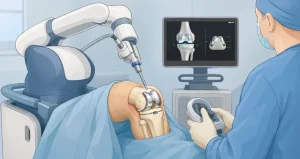
That’s what Cleveland Clinic Weston billed my insurance for the Cardiac Surgery — a minimally invasive approach through a small right-side incision rather than a full sternotomy, with robotic-assisted visualization. My employer plan through the school district covered the bulk after negotiated rates. My out-of-pocket maximum was $7,500.
I paid $7,500. I am fully aware that I got lucky.
If you’re uninsured, underinsured, or your plan carries a high deductible, that same bill is a fundamentally different conversation — and I don’t want to mention my manageable outcome and simply move on. Cleveland Clinic has a financial counseling team; I spoke at length with a coordinator named Rosa who was extraordinarily patient with my spreadsheet-based questions. They offer charity care and payment plans. But navigating that system takes energy you may not have while simultaneously preparing for open-heart surgery.
Sure, it’s all clearly outlined in the patient portal. On paper.
The hidden costs landed differently. Twelve days off work — unpaid, because I’d exhausted sick leave during the February diagnostic workup. Two flights and a hotel week for my wife during my recovery. One post-discharge medication that my pharmacy didn’t stock, requiring an overnight courier. Small line items. They accumulated to approximately $4,200 beyond the medical bill.
Nobody warned me about that. I should have asked.
Call the hospital’s financial counseling line before you decide anything. Ask three specific questions: What is the cash-pay rate? What charity care programs exist and what’s the application process? And what is billed separately by individual physicians versus included in the facility fee? Those are not the same number, and the difference can surprise you.
What Minimally Invasive Cardiac Surgery Actually Feels Like
I want to be careful here because I’m not a physician, and a single patient’s experience is exactly that — one data point.
The incision was four inches. Not the sternum-splitting chest opening most people picture when they imagine heart surgery. Four inches on the right side, between the ribs. I have a scar. I forget it’s there most days.
What I did not forget: the first 72 hours.
Cleveland Clinic Weston’s pain management team is genuinely excellent. They are also extremely honest that there is a ceiling to what medication can do, and that cardiac surgery recovery involves a specific quality of pain that no protocol completely resolves. The chest tube removal on day two was the single most unpleasant experience of my adult life. Medical literature tends to describe it as “uncomfortable.” That is not the word I would use.
But.
By day four, I was walking laps in the cardiac recovery unit. Day ten, I was home. Week six, I attended my daughter’s graduation. Eight months post-surgery, Dr. Forsythe showed me an echocardiogram where the regurgitation that had been remodeling my heart for years was classified as “trivial.” Her word. She showed me the imaging, then she smiled — which I hadn’t seen her do in the context of my chart.
That hit me harder than I expected. I hadn’t understood how much I’d been holding until some of it released.
Before your surgery date: Find out your exact discharge criteria. Don’t wait until you’re in the hospital. Knowing the benchmarks — chest tube removed by what point, walking what distance before they release you — gives you targets when you’re too exhausted to think clearly.
The Honest Ledger, Six Months Later
Would I choose Cleveland Clinic again?
Without hesitation.
Would I do several things differently? Also yes. I’d start the financial conversations during the decision process — not after I’d committed to the facility. I’d bring my wife to every pre-operative consultation, because I retained maybe 60 percent of what I was told under stress and forgot the rest.
And I’d ask my surgeon specifically how many times he’d performed this exact minimally invasive right-thoracotomy approach — not mitral repair generally, but this approach — before the night before surgery rather than the morning of.
That last one I’m genuinely embarrassed about.
Bottom line: high-volume cardiac surgery centers are built for throughput as much as outcomes, and the patient experience can feel impersonal in ways that are jarring when you’re scared. The care was excellent. Communication was sometimes inconsistent — two post-operative calls returned by people who clearly hadn’t read my chart beforehand. Those things coexist.
The institution’s surgical results are what the data says they are. The rest is navigable if you go in prepared, with realistic expectations and someone in your corner who can absorb information when you can’t.
My valve is working. My heart is healing. I walked four miles last Sunday morning and thought about none of this.
That’s the ledger. That’s the honest answer.
Your next step: If you’ve received a mitral valve diagnosis, request a copy of your full echocardiogram report — not just a verbal summary — and have it reviewed by at least two cardiac surgeons at different institutions before you decide. The extra step costs time. It is worth every day of it.




Be First to Comment